
One framework for the entire operational lifecycle.
Core Platform is the application framework for workflow, case management, scheduling, documents, communications, reporting and security. Secure Exchange is built on it. Deploy a Core appliance, run it on your own infrastructure, or use Synaptic-managed hosting.
Separate systems make the operation harder to run.
Case management, scheduling, documents, communications and resource coordination are often separate products. Each one keeps its own data, permissions and reports.
Core Platform provides these capabilities in one framework. Tenant data, users, configuration and integrations remain separate. The application is bilingual, and localization extends through an implemented DeepL integration.
Operational efficiency
Run workflow, scheduling and communications in the same application.
Decision intelligence
Eleven role-specific dashboards, with real-time analytics and reporting.
Governance
Category- and record-level access, complete audit trails, and configurable security policies.
Less repeated build effort
Reuse the framework for the next application instead of rebuilding the same capabilities.
What the framework provides.
Workbasket management
Cases, orders and dockets, with stage-based workflows, priority handling and service-level tracking.
Scheduler & calendar
Month, week, day, agenda, timeline, Gantt and Kanban views, with conflict detection.
Resource management
Assign people and resources, combine availability, and balance workload.
Document management
Upload, categorize and index documents. Store them locally, in the database, or in Amazon S3, with configurable encryption at rest.
Email integration
Inbound IMAP scanning, categorization, and linking messages to the related work item.
Workflow engine
Configurable processes, stage order and role permissions, with JSON import and export.
Role-based dashboards
Eleven layouts for operational, executive, support and compliance responsibilities, with real-time reporting.
Performance metrics
Activity, task completion and productivity, reported as the work happens.
Template manager
Reusable email, SMS and document templates, with bilingual content and further localization.
Zoom & SMS integration
Schedule Zoom meetings from the calendar. Send two-way SMS through Twilio, with delivery tracking.
Administration suite
Users, roles, departments, menus, categories, tax and brand presentation. Administrative actions are logged and reviewable.
Progressive Security Response
Escalating delays, automatic account lockout and automatic account recovery.
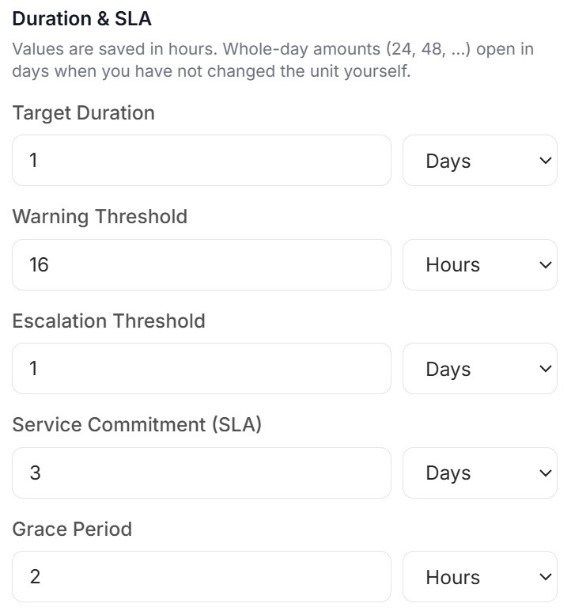
Control who can see each record, and how work is timed.
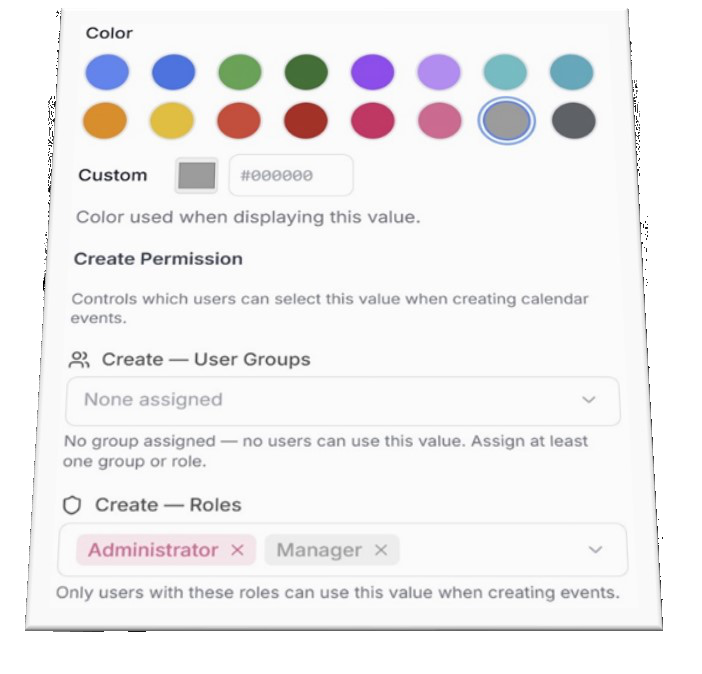
Access is defined by role and by category, document, note, event and resource. Administrators decide who can view, create, edit or delete a given record.
- Category-level and record-level permissions by user group and role
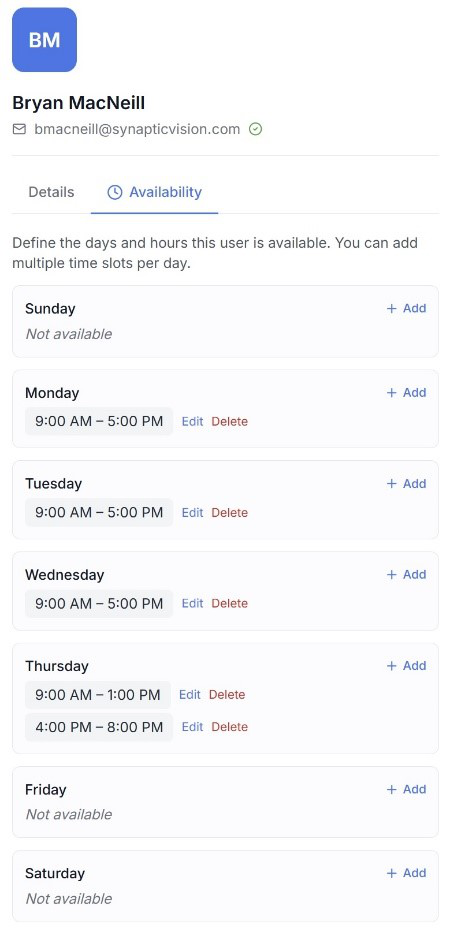
- Individual availability, with more than one time slot per day
- Target durations, warning thresholds, escalation, service-level targets and grace periods
- True multi-tenancy: separate data, users, configuration, integrations and brand presentation
A Java framework, exposed as an API.
Business logic runs in the Java backend and is published as a REST API with OpenAPI documentation. The same API serves web, mobile, administration and further integrations.
Java
Multi-tenant application framework
Docker
Containerized deployment
Database
Oracle, PostgreSQL, Amazon RDS
API
REST and OpenAPI
Storage
Local, database, or Amazon S3
Implementation and deployment
- Cloud, on-premises or hybrid deployment
- Docker containers and standard Java application packaging
- Oracle Database, PostgreSQL and Amazon RDS, with Flyway migrations
- Integrations for Zoom, SMTP, IMAP, AWS, Twilio and Active Directory
- OpenAPI documentation, and JSON import and export of roles, workflows and templates
Security and access control
- JWT authentication and multi-level role and permission structures
- Configurable password and session policies, with two-factor authentication enforcement
- Progressive automatic account lockout and automatic account recovery
- API rate limiting and monitoring
- Configurable encryption at rest, complete audit trails, CORS, security headers and IP-based access controls
From the front line to the boardroom.
Executive leadership
Role-specific dashboards for oversight of workload and performance, without the operational queue.
Operations managers
Workload, resource scheduling, escalation and service-level targets in one interface.
Front-line staff
The work item, with its documents, email, notes and schedule together.
IT and administrators
Users, permissions, workflows, account recovery and a reviewable audit trail.
Clients and stakeholders
Notifications, meetings and coordinated delivery from the same operational record.
International teams
Bilingual application support, with extensible localization and DeepL integration.
Built for organizations that run complex operations.
Government and public sector
Caseloads, service-level targets and a complete audit trail across departments.
Professional services
Client matters, resource scheduling and shared work across teams.
Healthcare and social services
Coordination across practitioners, with record-level access to documents and communications.
Enterprise operations
Orders, requests and workflows for human resources, finance and shared services.
Five reasons organizations adopt it.
An integrated framework
Workflow, cases, scheduling, documents, communications and administration are part of the platform.
True multi-tenancy
Separate tenant data, users, configuration, integrations and brand presentation on one deployment.
Record-level access
Permissions at the category, document, note, event and resource level, with a complete audit trail.
A choice of deployment
Cloud, on-premises or hybrid. Core appliance, your infrastructure, or Synaptic-managed hosting. Docker or standard Java packaging.
Bilingual, and extensible
Bilingual application support, localization, and an implemented DeepL integration.
- Purchase and deploy the Core appliance
- Deploy the framework on your own infrastructure
- Use Synaptic Vision hosting and managed operations
- Engage Synaptic Vision to configure, customize and extend it
- Reuse platform capabilities instead of rebuilding them for each application
- Disaster recovery and load balancing, configured for the deployment
Customer ownership
Customers retain ownership of their proprietary modules, subject to the applicable development and licensing agreements. A deployment can begin with the appliance or the framework. Configuration and extension follow when the application requires them.
See Secure Exchange, built on CoreStart with one application. Extend from there.
Begin with a team or a process. The same framework supports a broader rollout. We can map Core Platform to the application you need to run.